Net Metering in Pakistan: How to Turn Your Roof Into a Power Plant
Net metering has quietly become the most powerful reason to install solar panels in Pakistan. Instead of wasting the sunshine your roof captures at midday, net metering lets you sell it back to the grid and draw credits against your evening usage. In 2026, understanding this mechanism is the difference between a good investment and a great one.
This article explains how net metering works, how to apply, and how to size a system so your bill drops as close to zero as regulations allow. We keep the focus practical, because policy details only matter once you translate them into rupees saved.
What Is Net Metering and Why Does It Matter?
Net metering is a billing arrangement where a bi-directional meter records both the electricity you consume and the surplus you export. Your utility then bills you only for the net difference. During sunny hours your meter effectively runs backward, banking credits you spend after sunset.
The framework is regulated nationally, and the National Electric Power Regulatory Authority (NEPRA) sets the rules that distribution companies must follow. Because the policy is standardized, homeowners across provinces enjoy broadly similar treatment, which makes planning easier.
Crucially, net metering removes the need for expensive batteries for many households. The grid becomes your virtual battery, storing daytime surplus at no extra hardware cost.
Who Qualifies?
Any consumer on a three-phase connection with a sanctioned load can typically apply, subject to system-size limits tied to that load. Both homes and commercial premises qualify, which is why shops and small factories increasingly join the scheme.
How Do You Apply for Net Metering?
The process sounds bureaucratic, but a competent installer handles most of it for you. Still, knowing the steps keeps you from being overcharged for paperwork.
- Install a grid-tied or hybrid system sized within your sanctioned load.
- Obtain the required test reports and equipment specifications.
- Submit the application to your distribution company through the online portal.
- Pass the site inspection and meter verification.
- Receive your net-metering agreement and bi-directional meter.
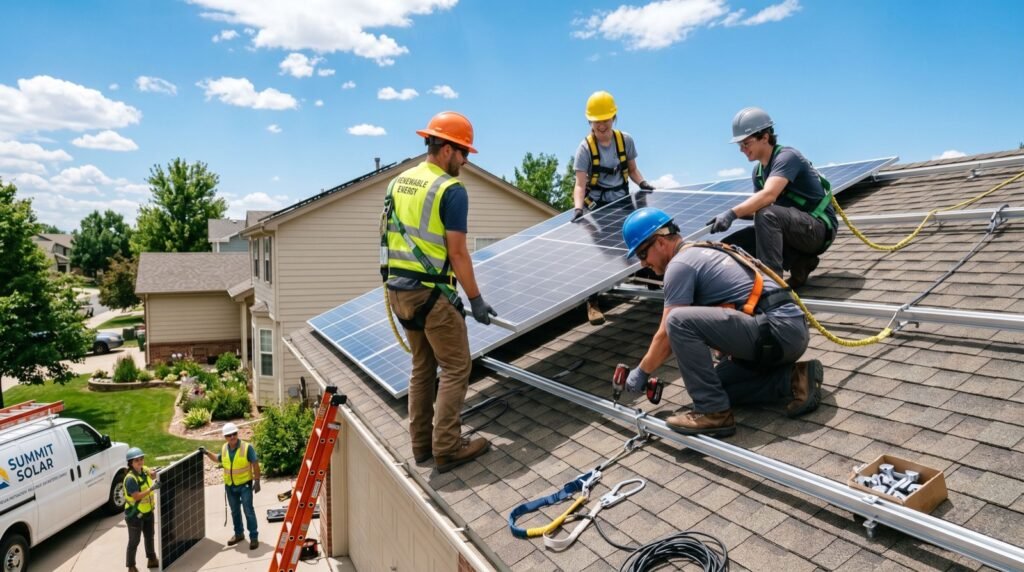
Timelines vary by region, but most connections finalize within a few weeks once documents are complete. Choosing reliable local experts for the rooftop groundwork keeps the physical installation on schedule so your application never stalls on preventable delays.
Sizing Your System for Maximum Credit
Oversizing wastes money because export tariffs are usually lower than the retail rate you pay. Undersizing leaves savings on the table. The sweet spot matches your annual generation closely to your annual consumption.
| Household Profile | Recommended Size | Typical Bill Before | Expected Bill After |
|---|---|---|---|
| Compact home, low AC use | 3 kW | PKR 22,000 | PKR 3,000–6,000 |
| Family home, moderate AC | 5–6 kW | PKR 40,000 | PKR 5,000–9,000 |
| Large home or shop | 10 kW | PKR 80,000 | PKR 8,000–15,000 |
Notice the bill rarely hits zero, because fixed charges and off-peak imports remain. Even so, a 75 to 85 percent reduction is a realistic and repeatable outcome across most Pakistani cities.
Location Still Matters
Irradiation differs by region, so identical systems yield different output in Sialkot versus the northern valleys. Homeowners exploring solar panels in Sialkot should ask their installer for a location-specific generation estimate rather than a generic national average.
Common Mistakes That Kill Net-Metering Savings
Even a well-designed system underperforms if a few basics go wrong. Avoiding these traps protects your return.
- Wrong inverter setting: Export must be enabled and configured correctly, or credits never accrue.
- Shaded panels: Even partial shade on one panel can drag a whole string down.
- Ignoring the app: Monitoring catches faults early before they cost you a full billing cycle.
- Cheap connectors: Poor DC joints heat up, waste energy, and become fire risks.
Professional workmanship prevents most of these issues. For instance, buyers arranging solar installation in Rawalpindi should insist on a commissioning report that confirms export is active and readings match the inverter display.
Frequently Asked Questions
Does net metering require batteries?
No. Net metering uses the grid as your storage, so a standard grid-tied system without batteries can still eliminate most of your bill. Add batteries only if you also want backup during outages.
How long does net-metering approval take?
Most applications complete within a few weeks once documentation and the site inspection are done. Delays usually stem from incomplete paperwork rather than the utility itself.
Can I still get power during load-shedding with net metering?
A pure grid-tied system shuts off during outages for safety. If you want power during load-shedding, choose a hybrid inverter with a small battery alongside your net-metering setup.
Is net metering worth it for a small home?
Yes. Even a modest 3 kW system can cut a small household bill by three-quarters. The lower upfront cost also means a faster payback for compact homes.
How Net Metering Affects Your Payback Period
Net metering directly shortens the time it takes for solar to pay for itself. By offsetting high retail tariffs with your daytime surplus, you effectively earn the full value of every unit you consume rather than a discounted export rate. That maximizes your monthly savings.
Consider a household paying a steep evening tariff. Every kilowatt-hour of banked daytime credit that cancels an evening import saves the full retail price, which is exactly where the tariff hurts most. This is why net metering, rather than raw generation, drives the strongest returns for grid-tied homes in 2026.
Over a typical 25-year panel life, the cumulative savings from net metering dwarf the original installation cost. Once your system pays for itself in the first few years, the remaining two decades of credits behave like an inflation-proof return that keeps growing as tariffs rise.
Track Your Meter Readings
Make a habit of noting your import and export figures each billing cycle. Comparing them against your inverter’s app quickly reveals whether the system performs as promised. Any sudden drop in export usually points to shading, dust, or a configuration slip worth fixing immediately.
Maintaining a Net-Metered System
A net-metered system rewards light, consistent care. Because your savings depend on export volume, anything that reduces generation also reduces your credits. Keeping panels clean and connections sound protects your bottom line month after month.
- Rinse dust off the panels regularly, especially before the summer peak.
- Confirm the inverter still shows export activity during sunny hours.
- Inspect DC connectors annually for heat discoloration.
- Keep firmware updated so net-metering features stay compliant.
These small routines cost almost nothing yet preserve the full value of your investment. A neglected system slowly leaks savings, while a maintained one delivers its promised return for decades.
Conclusion
Net metering turns your roof into a small power plant that quietly pays you back every month. When you size the system correctly, enable export properly, and partner with skilled installers, solar panels in Pakistan deliver savings that compound for decades. Study your consumption, apply through the proper channel, and let the sun cover your bill.